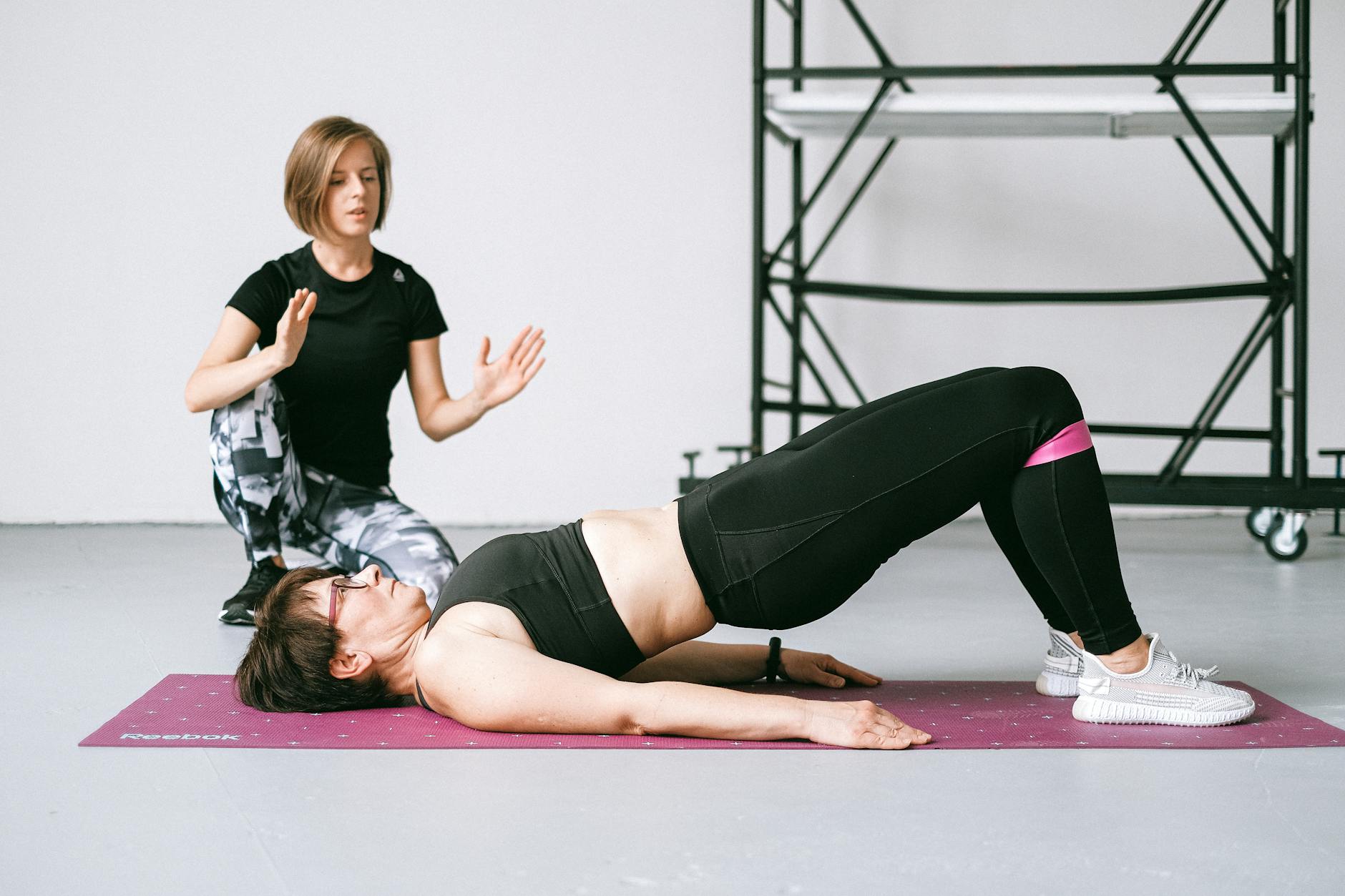
Flexibility exercises are systematic movements designed to improve your range of motion, reduce muscle tension, and enhance overall mobility through controlled stretching and dynamic movement patterns.
Table of Contents
- The Essentials
- Jump To
- Understanding Flexibility Exercise Benefits
- What Makes Flexibility Exercises Effective?
- Getting Started: 5 Essential Flexibility Exercises for Beginners
- 1. Hip Flexor Stretch (Low Lunge)
- 2. Seated Forward Fold
- 3. Doorway Chest Stretch
- 4. Cat-Cow Spinal Movement
- 5. Standing Calf Stretch
- Complete 10-Exercise Flexibility Routine
- Dynamic Warm-Up Sequence (Exercises 1-3)
- Static Flexibility Sequence (Exercises 4-10)
- How Often Should You Do These 10 Flexibility Exercises?
- Flexibility Exercises for Seniors: Safe and Effective Approaches
- Chair-Based Flexibility Sequence
- Are Flexibility Exercises Safe for Seniors with Arthritis?
- Kid-Friendly Flexibility Exercises That Make Movement Fun
- Animal Movement Game Sequence
- What’s the Best Age to Start Flexibility Training for Kids?
- Office Worker Solutions: Desk-Based Flexibility Exercises
- Hourly Movement Break Routine (5 Minutes)
- Can You Do Flexibility Exercises in Business Attire?
- Sport-Specific Flexibility Training
- Running-Specific Flexibility Focus
- Swimming-Specific Flexibility Focus
- Should Athletes Stretch Before or After Training?
- Recovery and Rehabilitation Through Flexibility
- Post-Injury Flexibility Progression
- When Should You Avoid Flexibility Exercises During Injury Recovery?
- Timing and Frequency Optimization
- Daily Flexibility Schedule Options
- How Long Does It Take to See Flexibility Improvements?
- Creating Your Personalized Flexibility Plan
- Flexibility Assessment and Goal Setting
- Sample Flexibility Plans by Lifestyle
- Should You Download a Flexibility Exercises PDF or Use an App?
- How often should I do flexibility exercises?
- Can flexibility exercises replace strength training?
- What’s the difference between stretching and flexibility exercises?
- Are flexibility exercises safe during pregnancy?
- Should flexibility exercises hurt?
- Can older adults start flexibility exercises safely?
- How long should I hold each flexibility exercise?
- What time of day is best for flexibility exercises?
The Essentials
• Start with 10-15 minutes daily of basic stretches to see measurable improvements within 2-4 weeks
• Dynamic stretches work best before exercise, static stretches are ideal for post-workout and evening routines
• Consistency trumps intensity – gentle daily practice outperforms aggressive weekly sessions
• Target all major muscle groups: hamstrings, hip flexors, shoulders, calves, and spine
• Proper breathing enhances stretch effectiveness and prevents injury
Jump To
- Understanding Flexibility Exercise Benefits
- Getting Started: 5 Essential Flexibility Exercises for Beginners
- Complete 10-Exercise Flexibility Routine
- Flexibility Exercises for Seniors: Safe and Effective Approaches
- Kid-Friendly Flexibility Exercises That Make Movement Fun
- Office Worker Solutions: Desk-Based Flexibility Exercises
- Sport-Specific Flexibility Training
- Recovery and Rehabilitation Through Flexibility
- Timing and Frequency Optimization
- Creating Your Personalized Flexibility Plan
Understanding Flexibility Exercise Benefits
Flexibility exercises deliver measurable improvements in joint range of motion, muscle function, and daily movement quality. Regular stretching routines reduce injury risk by up to 54% according to systematic reviews, while also improving posture, reducing chronic pain, and enhancing athletic performance.
The American College of Sports Medicine recommends flexibility training 2-3 days per week for optimal health outcomes. Beyond injury prevention, flexibility exercises benefits include improved circulation, stress reduction through mindful movement, and better sleep quality.
Your body responds to consistent flexibility work by increasing muscle fiber length, improving fascial mobility, and enhancing neuromuscular coordination. These adaptations translate into easier daily activities, from reaching overhead shelves to getting out of bed without stiffness.
Key Takeaway: Regular flexibility training creates a cascade of benefits that extend far beyond simple stretching – it’s foundational movement medicine for modern life.
What Makes Flexibility Exercises Effective?
Effective flexibility exercises combine proper positioning, controlled breathing, and progressive overload principles. Unlike static stretching alone, comprehensive flexibility training includes dynamic movements, proprioceptive neuromuscular facilitation (PNF), and functional range of motion work.
Timing matters significantly. Research shows that holding static stretches for 30-60 seconds optimizes muscle lengthening without triggering protective reflexes. Dynamic movements prepare muscles for activity, while static holds create lasting length changes.
Getting Started: 5 Essential Flexibility Exercises for Beginners
These five fundamental movements target the body’s most commonly tight areas and require no equipment. Perfect for flexibility exercises for beginners, this routine addresses the hip flexors, hamstrings, shoulders, calves, and spine – the movement patterns most affected by modern sedentary lifestyles.
Start with 30-second holds for static stretches and 10 repetitions for dynamic movements. Listen to your body and never stretch into pain – mild tension indicates effective stretching, while sharp or burning sensations signal you’ve gone too far.
1. Hip Flexor Stretch (Low Lunge)
Step your right foot forward into a lunge position, lowering your left knee to the ground. Press your hips forward gently while keeping your torso upright. This targets the often-tight hip flexors that contribute to lower back pain and poor posture.
2. Seated Forward Fold
Sit with legs extended, spine tall. Hinge forward from your hips, reaching toward your toes while keeping your back straight. This classic stretch lengthens the entire posterior chain from calves to upper back.
3. Doorway Chest Stretch
Place your forearm against a doorframe at shoulder height. Step forward gently, feeling the stretch across your chest and front shoulder. Essential for counteracting rounded shoulder posture from desk work.
4. Cat-Cow Spinal Movement
On hands and knees, alternate between arching your back (cow) and rounding it (cat). This dynamic movement improves spinal mobility and reduces back stiffness.
5. Standing Calf Stretch
Place hands against a wall, step your right foot back 2-3 feet. Keep your heel down and lean forward, stretching the calf muscle. Switch sides after 30 seconds.
Key Takeaway: Master these five movements before progressing to more complex routines – they form the foundation of lifelong flexibility practice.
Complete 10-Exercise Flexibility Routine
This comprehensive routine targets every major muscle group in 15-20 minutes. Designed as flexibility exercises at home, it requires minimal space and no equipment while delivering full-body mobility improvements.
Perform this sequence 3-4 times per week, holding static stretches for 30-60 seconds and completing 8-12 repetitions for dynamic movements. The routine follows a logical progression from dynamic warm-up movements to deeper static stretches.
Dynamic Warm-Up Sequence (Exercises 1-3)
1. Arm Circles: Large and small circles, both directions, 30 seconds each
2. Leg Swings: Front-to-back and side-to-side, 10 each direction per leg
3. Torso Twists: Standing with arms extended, rotate left and right, 20 total
Static Flexibility Sequence (Exercises 4-10)
4. Downward Dog: Full-body stretch emphasizing calves, hamstrings, and shoulders
5. Pigeon Pose: Deep hip opener, hold 60 seconds each side
6. Seated Spinal Twist: Targets the thoracic spine and improves rotation
7. Hamstring Stretch: Supine with towel assistance or standing variation
8. Shoulder Cross-Body Stretch: Pull arm across chest, hold 30 seconds each side
9. Quad Stretch: Standing or side-lying, focus on front thigh lengthening
10. Child’s Pose: Final relaxation stretch for spine, hips, and shoulders
Progression comes through increased hold times, deeper ranges of motion, and improved form rather than forcing positions. Your flexibility will improve gradually over 4-6 weeks of consistent practice.
How Often Should You Do These 10 Flexibility Exercises?
Perform this complete routine 3-4 times per week for optimal results. Daily practice is beneficial but not required – your muscles need recovery time to adapt and lengthen. On off days, incorporate 5-10 minutes of gentle stretching focused on your tightest areas.
Consistency matters more than frequency. Three quality sessions per week will produce better results than sporadic daily attempts. Track your progress by noting improved range of motion in specific stretches over time.
Flexibility Exercises for Seniors: Safe and Effective Approaches
Senior-focused flexibility training emphasizes safety, balance, and functional movement patterns relevant to daily activities. Flexibility exercises for seniors should prioritize fall prevention, joint health, and maintaining independence through improved mobility.
Age-related muscle and joint changes require modified approaches. Start with chair-supported stretches, use shorter hold times (15-30 seconds), and focus on gentle, pain-free ranges of motion. The Centers for Disease Control and Prevention emphasizes flexibility training as essential for healthy aging.
Chair-Based Flexibility Sequence
Seated Neck Stretch: Gentle side bends and rotations, 15 seconds each direction
Seated Spinal Extension: Hands behind head, gentle backward arch
Ankle Circles: Both directions, improves circulation and prevents stiffness
Seated Figure-4 Stretch: Ankle on opposite knee, gentle forward lean
Shoulder Blade Squeezes: Improves posture and upper back mobility
Safety considerations include maintaining three points of contact when standing, avoiding bouncing movements, and stopping immediately if pain occurs. Balance should be prioritized over depth of stretch.
Key Takeaway: Senior flexibility training focuses on functional movements that directly improve quality of life rather than maximum range of motion.
Are Flexibility Exercises Safe for Seniors with Arthritis?
Gentle flexibility exercises can reduce arthritis pain and improve joint function when performed correctly. The key is moving joints through their available range without forcing or causing inflammation. Warm-up is crucial – consider light movement or warm compresses before stretching.
Avoid stretching during active flare-ups, and focus on maintaining rather than increasing range of motion during painful periods. Water-based stretching offers additional joint support and reduced impact.
Kid-Friendly Flexibility Exercises That Make Movement Fun
Children respond best to flexibility exercises disguised as games, animal movements, and imaginative play. Flexibility exercises for kids should build movement competency while developing body awareness and creating positive associations with physical activity.
Kids naturally possess greater flexibility than adults but lose it rapidly without regular movement. School-age children spend increasing hours in seated positions, making flexibility work more important than ever for proper development.
Animal Movement Game Sequence
Bear Walk: Hands and feet walking, stretches shoulders and calves
Frog Jumps: Deep squat position jumps, improves hip mobility
Cobra Stretch: Lying face down, push up to stretch spine like a snake
Butterfly Stretch: Seated with feet together, flap “wings” gently
Cat Stretch: All-fours position with back arching and rounding
Giraffe Reach: Standing tall reaches for “leaves” overhead
Keep sessions short (10-15 minutes), use music, and emphasize fun over perfect form. Children’s attention spans require variety and engagement rather than long holds.
Safety note: Children’s growth plates make them more susceptible to injury from aggressive stretching. Focus on natural, playful movements rather than forced positions.
What’s the Best Age to Start Flexibility Training for Kids?
Children can begin structured flexibility activities as early as age 3-4, but the approach should be entirely play-based. Formal stretching routines work better for school-age children (6-12) who can follow instructions and understand the purpose.
The goal at any age is movement literacy – helping children understand how their bodies move and feel comfortable in various positions. This foundation supports all future athletic and recreational activities.
Office Worker Solutions: Desk-Based Flexibility Exercises
Desk workers face unique flexibility challenges from prolonged sitting, forward head posture, and repetitive movements. These targeted exercises can be performed in office clothes without equipment, addressing the specific muscle imbalances created by desk work.
Prolonged sitting tightens hip flexors, weakens glutes, and creates thoracic spine stiffness. The average office worker sits 8-10 hours daily, making regular movement breaks essential for preventing chronic pain and postural dysfunction.
Hourly Movement Break Routine (5 Minutes)
Neck Side Bends: Combat forward head posture, 30 seconds each side
Seated Spinal Twist: Rotate from the middle back, hands on chair arms
Hip Flexor Stretch: Stand in lunge position beside desk
Doorway Chest Stretch: Counter rounded shoulder position
Calf Raises: Improve circulation and stretch lower legs
Shoulder Blade Squeezes: Strengthen and mobilize upper back
Set reminders for every 50-60 minutes of sitting. Even 2-3 minutes of movement breaks can prevent stiffness accumulation and maintain energy levels throughout the workday.
Can You Do Flexibility Exercises in Business Attire?
Most office-appropriate flexibility exercises work perfectly in business attire. Focus on upper body stretches, seated movements, and standing positions that don’t require floor work or extreme ranges of motion.
Consider keeping a change of shoes for movement breaks, as dress shoes limit ankle mobility and balance. Many stretches can be performed in private offices or designated wellness areas.
Sport-Specific Flexibility Training
Athletes require flexibility patterns that match their sport’s movement demands. Generic stretching routines miss the specific ranges of motion and muscle combinations that enhance performance and prevent sport-specific injuries.
Runners need hip flexor and calf flexibility, swimmers require shoulder girdle mobility, and golfers need rotational spine flexibility. Each sport creates particular muscle imbalances that targeted flexibility work can address.
Running-Specific Flexibility Focus
Hip Flexors: Counter the repetitive hip flexion of running stride
IT Band/TFL: Address lateral knee stress and hip stability
Calves/Achilles: Prevent overuse injuries in high-impact activities
Thoracic Spine: Maintain upright posture during distance running
Swimming-Specific Flexibility Focus
Shoulder Internal/External Rotation: Prevent swimmer’s shoulder impingement
Ankle Plantar Flexion: Improve kick efficiency and power
Thoracic Extension: Counter the forward-rounded swimming position
Hip Flexors: Balance the prone position demands of most strokes
Timing matters for athletes. Dynamic flexibility before training prepares muscles for action, while static stretching post-workout promotes recovery and maintains gains.
Should Athletes Stretch Before or After Training?
Dynamic stretching before training enhances performance, while static stretching afterward promotes recovery and flexibility gains. Pre-exercise static stretching can temporarily reduce power output, making dynamic warm-ups the preferred preparation method.
Post-exercise stretching when muscles are warm allows for deeper, more effective stretches that create lasting length changes. This timing optimizes both performance and flexibility development.
Recovery and Rehabilitation Through Flexibility
Therapeutic flexibility exercises accelerate injury recovery by promoting blood flow, reducing scar tissue formation, and restoring normal movement patterns. Rehabilitation requires a more precise, progressive approach than general fitness stretching.
The inflammatory phase of injury healing benefits from gentle, pain-free movement that maintains range without aggravating damaged tissues. As healing progresses, flexibility work becomes more aggressive to prevent permanent motion loss.
Post-Injury Flexibility Progression
Phase 1 (Days 1-7): Gentle, pain-free range of motion movements
Phase 2 (Weeks 2-4): Progressive stretching to restore normal length
Phase 3 (Weeks 4-8): Functional flexibility matching activity demands
Working with healthcare providers ensures appropriate progression and prevents re-injury. Some conditions require specific precautions or modified techniques.
Key Takeaway: Rehabilitation flexibility must balance aggressive enough to prevent stiffness with gentle enough to allow healing.
When Should You Avoid Flexibility Exercises During Injury Recovery?
Avoid stretching during acute inflammation, with suspected fractures, or when movement causes sharp, shooting pain. The first 48-72 hours after injury often require rest and protection rather than movement.
Certain injuries like ligament sprains may contraindicate stretching in specific directions. Professional guidance helps distinguish between helpful discomfort and harmful pain during recovery.
Timing and Frequency Optimization
Optimal flexibility gains occur with 10-15 minute daily sessions rather than longer weekly workouts. Muscle length adaptations require frequent, consistent stimulus – similar to learning a motor skill rather than building strength.
Morning stretching addresses overnight muscle stiffness and prepares the body for daily activities. Evening routines promote relaxation and recovery while taking advantage of naturally warmer muscles from daily movement.
Daily Flexibility Schedule Options
Morning Routine (10 minutes): Dynamic movements and gentle stretches to prepare for the day
Lunch Break (5-7 minutes): Targeted stretches for desk worker problem areas
Evening Routine (15 minutes): Deeper static stretches and relaxation-focused movements
Workout Days: Dynamic warm-up pre-exercise, static cool-down post-exercise
Rest Days: Gentle maintenance stretching for 5-10 minutes
Consistency trumps duration. Five minutes daily outperforms 30 minutes once weekly for flexibility development. Your muscles adapt to regular length demands through daily practice.
How Long Does It Take to See Flexibility Improvements?
Noticeable flexibility improvements typically appear within 2-4 weeks of consistent daily practice. Initial gains come from nervous system adaptations that allow muscles to relax into deeper positions.
Structural changes in muscle fiber length develop over 6-8 weeks. Significant flexibility gains in very tight areas may require 2-3 months of dedicated work, but maintain permanently with minimal weekly maintenance.
Creating Your Personalized Flexibility Plan
Effective flexibility planning starts with assessing your current limitations and matching exercises to your lifestyle constraints. The best routine is the one you’ll actually perform consistently, which means realistic time commitments and exercise selection.
Consider your primary activities, problem areas, available time, and equipment access. A busy parent needs different solutions than a retired adult or competitive athlete.
Flexibility Assessment and Goal Setting
Test your current range in key areas: overhead reach, forward fold, hip flexor length, and spinal rotation. These movements predict most daily activity success and injury risk.
Set specific, measurable goals like “touch toes without knee bend” or “overhead reach without back arch.” Specific targets create motivation and track progress better than vague “get more flexible” goals.
Sample Flexibility Plans by Lifestyle
Busy Professional: 5-minute morning routine, hourly desk breaks, 10-minute evening sequence
Athletic Competitor: Sport-specific dynamic warm-up, targeted post-workout stretching, weekly full-body session
Senior Adult: 15-minute gentle routine 3x weekly, daily 5-minute morning movement, balance integration
Stay-at-Home Parent: 10-minute kid-inclusive morning routine, nap-time personal session, family evening stretches
Start with your minimum viable routine – the amount you can commit to daily without fail. Build from there as habits strengthen.
Key Takeaway: The perfect flexibility plan balances your specific needs, realistic time constraints, and consistency requirements for long-term success.
Should You Download a Flexibility Exercises PDF or Use an App?
Both flexibility exercises pdf downloads and apps offer advantages for different learning styles. PDFs provide offline access and printable references, while apps offer video demonstrations and progress tracking.
Choose based on your preferences: visual learners benefit from apps with video, while readers prefer detailed written instructions. Many successful practitioners use both – apps for learning new exercises and PDFs for quick reference during workouts.
Frequently Asked Questions
How often should I do flexibility exercises?
Aim for 10-15 minutes of flexibility work daily for optimal results. Minimum effective dose is 3 sessions per week, but daily practice accelerates progress and maintains gains more effectively.
Can flexibility exercises replace strength training?
No, flexibility work complements but cannot replace strength training. Both are essential for complete fitness – flexibility provides range of motion while strength training builds the muscle to control that range.
What’s the difference between stretching and flexibility exercises?
Flexibility exercises encompass a broader range of movements including dynamic mobility, static stretching, and functional movement patterns. Stretching typically refers only to static positions held for time.
Are flexibility exercises safe during pregnancy?
Most flexibility exercises are safe and beneficial during pregnancy, but avoid deep twists, backbends, and positions that cause dizziness. The hormone relaxin increases joint laxity, requiring gentler approaches.
Should flexibility exercises hurt?
Effective stretching creates mild tension or pulling sensations, never sharp pain. Work within a 4-6 out of 10 intensity level – enough to feel the stretch without triggering protective muscle guarding.
Can older adults start flexibility exercises safely?
Yes, gentle flexibility work is safe and highly beneficial for older adults. Start with chair-supported movements, shorter holds, and focus on functional ranges rather than maximum flexibility.
How long should I hold each flexibility exercise?
Static stretches benefit from 30-60 second holds, while dynamic movements use 8-12 repetitions. Longer holds don’t necessarily create better results and may cause fatigue.
What time of day is best for flexibility exercises?
Both morning and evening have advantages. Morning stretching prepares the body for daily activities, while evening routines promote relaxation and take advantage of warmer muscles from daily movement.
Your journey toward improved flexibility starts with a single session. Choose the routine that fits your current lifestyle, commit to consistency over perfection, and trust the process. Small daily efforts compound into significant mobility improvements that enhance every aspect of your physical life.
Remember that flexibility is a skill requiring patience and practice. Some days will feel easier than others, progress comes in waves rather than linear improvements, and the real benefits extend far beyond the stretches themselves into better movement quality, reduced pain, and enhanced life satisfaction.
Further reading: See ACSM education resources, and NIH ODS supplement fact sheets.
Related reading: Flexibility Exercises: The Complete Guide to.
Related reading: HIIT for Beginners: The Complete Guide.