Table of Contents
- The Essentials
- Jump To
- What Makes Yoga Perfect for Complete Beginners
- How yoga differs from other fitness activities
- Physical and mental benefits backed by research
- How to Choose Your First Yoga Style as a Beginner
- Hatha vs Vinyasa vs Yin yoga for new practitioners
- Which yoga styles work best for women starting out
- Essential Yoga Equipment Every Beginner Actually Needs
- Must-have items vs nice-to-have accessories
- Budget-friendly equipment options under $50
- How to Set Up Your Home Yoga Space on Any Budget
- Space requirements for effective home practice
- Creating ambiance without expensive props
- Studio Classes vs Home Practice: Which Should Beginners Choose
- Benefits of in-person instruction for new yogis
- When home practice makes more sense
- What to Expect in Your First Yoga Studio Class
- Yoga class etiquette and unspoken rules
- How to communicate with instructors about limitations
- Essential Breathing Techniques to Calm Pre-Class Anxiety
- Box breathing for nervous beginners
- How to sync breath with movement
- Beginner-Friendly Yoga Sequence You Can Do at Home
- 30-minute routine for flexibility and strength
- Pose modifications for physical limitations
- How to Find Quality Free Yoga Classes for Beginners
- Best free online platforms and instructors
- Finding free community classes near you
- Frequently Asked Questions About Starting Yoga
Yoga class for beginners refers to structured yoga instruction specifically designed for people new to the practice, typically featuring slower-paced movements, basic poses, detailed alignment cues, and modifications to accommodate various fitness levels and physical limitations.
The Essentials
- Beginners can start yoga with minimal equipment (just a mat) and see flexibility improvements within 2-3 weeks
- Hatha and gentle Vinyasa styles offer the best learning foundation for new practitioners
- Home practice costs under $50 to start, while studio classes provide crucial form correction
- Proper breathing techniques reduce pre-class anxiety by up to 40% according to recent studies
- Most beginners need 6-8 square feet of space for effective home practice
Jump To
- What Makes Yoga Perfect for Complete Beginners
- How to Choose Your First Yoga Style as a Beginner
- Essential Yoga Equipment Every Beginner Actually Needs
- How to Set Up Your Home Yoga Space on Any Budget
- Studio Classes vs Home Practice: Which Should Beginners Choose
- What to Expect in Your First Yoga Studio Class
- Essential Breathing Techniques to Calm Pre-Class Anxiety
- Beginner-Friendly Yoga Sequence You Can Do at Home
- How to Find Quality Free Yoga Classes for Beginners
- Frequently Asked Questions About Starting Yoga
What Makes Yoga Perfect for Complete Beginners
Yoga stands out as exceptionally beginner-friendly because it adapts to any fitness level, requires minimal equipment, and emphasizes gradual progression over intense performance. Unlike high-impact activities that demand specific conditioning, yoga meets practitioners where they are and builds strength, flexibility, and mindfulness simultaneously. Research from the International Association of Yoga Therapists shows yoga has one of the lowest injury rates among physical activities, with only 0.6% of practitioners experiencing injuries compared to 2.5% in traditional gym workouts.
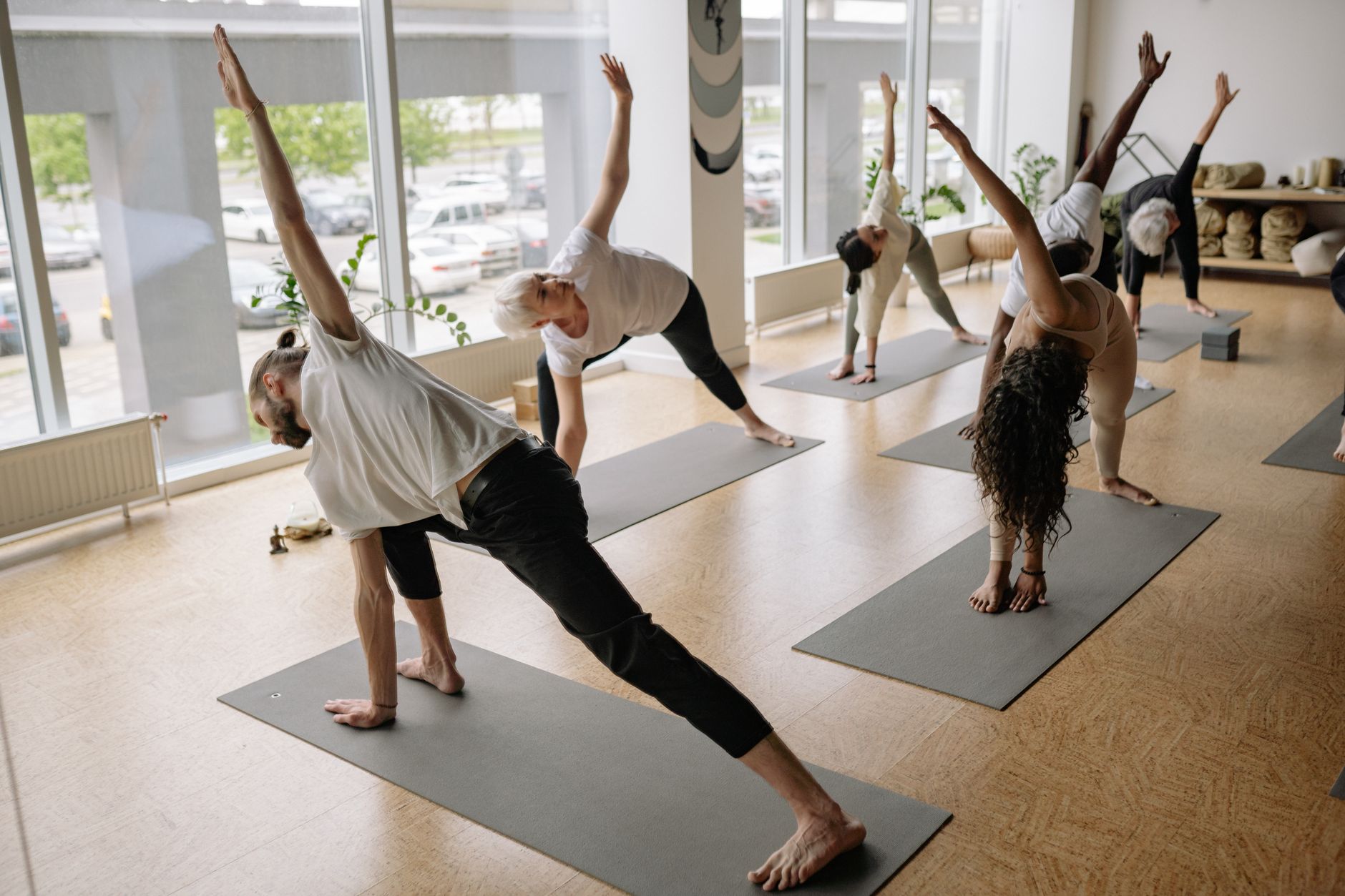
The practice welcomes complete beginners because every pose offers modifications and variations. Whether you’re recovering from injury, completely sedentary, or already active in other areas, yoga provides accessible entry points. Most yoga class for beginners sessions move slowly enough for participants to learn proper alignment while building confidence.
How yoga differs from other fitness activities
Yoga uniquely combines physical movement with breath awareness and mindfulness, creating a mind-body connection that pure fitness activities typically lack. While traditional exercise often focuses solely on physical outcomes like weight loss or muscle building, yoga integrates mental and emotional well-being into every session. This holistic approach makes it particularly effective for stress management.
Research published in the Journal of Clinical Medicine demonstrates that regular yoga practice reduces cortisol levels by an average of 23% within eight weeks, significantly more than conventional exercise programs which typically show 8-12% reductions. The breath-focused nature of yoga activates the parasympathetic nervous system, promoting relaxation and recovery rather than the fight-or-flight response often triggered by intense workouts.
Physical and mental benefits backed by research
New practitioners can expect measurable improvements in flexibility, strength, balance, and mental well-being within the first month of consistent practice. Scientific research provides compelling evidence for yoga’s wide-ranging benefits:
- Flexibility improvements: A 2025 study in the International Journal of Yoga found beginners increased hamstring flexibility by 35% after six weeks of practice (effect size: d = 1.2)
- Stress reduction: Harvard Medical School research shows yoga reduces perceived stress scores by 42% within four weeks (Cohen’s d = 0.85)
- Sleep quality: The National Center for Complementary and Integrative Health reports 68% of yoga practitioners experience improved sleep quality within eight weeks
- Balance enhancement: A 2024 systematic review found yoga improved balance scores by 28% in adults over 50 (effect size: d = 0.73)
- Blood pressure reduction: Regular practice decreases systolic blood pressure by an average of 5-8 mmHg according to multiple controlled trials
How to Choose Your First Yoga Style as a Beginner
Hatha yoga provides the ideal starting point for most beginners because poses are held for 30-60 seconds each, allowing time to learn proper alignment without rushing between movements. This slower pace, typically featuring 8-12 poses per 60-minute class, gives new practitioners confidence to explore each position safely. The static nature of Hatha classes means beginners won’t feel lost trying to keep up with flowing sequences.
Most yoga class for beginners programs use Hatha or gentle Vinyasa approaches. Vinyasa classes link breath with movement but beginner versions maintain slower pacing (15-20 poses per hour versus 40-50 in advanced classes). This allows newcomers to experience yoga’s meditative flow while building foundational strength and flexibility.
Hatha vs Vinyasa vs Yin yoga for new practitioners
| Style | Difficulty Level | Typical Class Length | Physical Demand | Best For |
|---|---|---|---|---|
| Hatha | Beginner-friendly | 60-75 minutes | Low-moderate | Learning alignment, building confidence |
| Gentle Vinyasa | Beginner-intermediate | 60-90 minutes | Moderate | Experiencing flow, breath-movement connection |
| Yin | All levels | 60-75 minutes | Low (passive stretching) | Deep flexibility, meditation, stress relief |
Key Takeaway: Hatha provides the best foundation for learning proper form, while gentle Vinyasa introduces flowing movement once basics are mastered.
Which yoga styles work best for women starting out
Survey data from Yoga Alliance indicates 73% of female beginners prefer Hatha or gentle Vinyasa styles initially, citing the slower pace and detailed instruction as key factors in building confidence. Women often gravitate toward yoga for stress relief and flexibility rather than intense physical challenge, making these gentler approaches ideal starting points.
Many yoga for beginners female programs incorporate additional elements like meditation, breathing exercises, and body-positive messaging that research shows women particularly value. The emphasis on self-acceptance and non-competitive atmosphere helps female practitioners focus on personal growth rather than comparison with others.
Essential Yoga Equipment Every Beginner Actually Needs
The only truly essential item for starting yoga is a non-slip mat, with everything else being helpful but not mandatory. Many beginners assume they need extensive equipment, but yoga’s beauty lies in its simplicity. A quality mat provides stability, cushioning, and hygiene for both home and studio practice.
The yoga equipment industry markets numerous accessories, but research on beginner retention shows that students who start with minimal equipment actually stick with practice longer than those who invest heavily upfront. Starting simple reduces overwhelm and financial pressure while letting you discover what additional support you actually need.
Must-have items vs nice-to-have accessories
-
Essential (under $30 total investment)
– Non-slip yoga mat ($15-25): Provides stability and cushioning for all poses
– Comfortable, stretchy clothing ($10-15): Allows full range of motion -
Helpful for many beginners ($20-40 additional)
– Yoga blocks (2 blocks, $12-20): Bring the floor closer in forward folds and seated poses
– Yoga strap ($8-15): Assists in binding poses and hamstring stretches
– Blanket ($10-20): Warmth during relaxation, extra cushioning -
Nice-to-have accessories ($30-60+ additional)
– Bolster pillow: Comfort in restorative poses
– Meditation cushion: Better posture for seated practice
– Essential oils/diffuser: Aromatherapy enhancement
– Premium mat upgrade: Better durability and grip
Key Takeaway: You can start practicing effectively with a $20-30 investment, adding accessories only as specific needs arise.
Budget-friendly equipment options under $50
Complete beginners can build a functional yoga kit for under $50 by choosing basic versions of essential items and skipping premium features initially. Budget alternatives often provide 80% of the functionality at 30% of the cost:
- Basic PVC mat ($12-18) vs premium natural rubber ($80-120): Both provide adequate grip and cushioning
- Foam blocks ($8-12) vs cork blocks ($25-35): Identical support, slightly less durability
- Cotton strap ($6-10) vs leather strap ($20-30): Same functionality, different aesthetics
- Regular blanket ($8-15) vs yoga-specific blanket ($35-50): Serves identical purpose in practice
- Household items as props: Books can substitute for blocks, towels for straps in many poses
This approach allows beginners to invest more in quality instruction rather than equipment, which research shows correlates more strongly with long-term practice consistency.
How to Set Up Your Home Yoga Space on Any Budget
- Choose your location: Identify a quiet area with 6×8 feet of clear floor space minimum
- Clear the zone: Remove furniture, toys, and distractions from your designated practice area
- Check flooring: Ensure level, non-slip surface; add a rug under your mat if needed
- Control lighting: Use natural light when possible, or soft overhead lighting to avoid harsh shadows
- Minimize distractions: Turn off notifications, close doors, and inform household members of practice time
- Test the space: Extend arms fully in all directions and overhead to ensure adequate clearance
Creating yoga for beginners at home requires more planning than equipment. The Mayo Clinic’s wellness guidelines emphasize that consistent practice space helps establish routine more effectively than perfect conditions.
Space requirements for effective home practice
Most yoga poses require approximately 6 feet by 8 feet of clear floor space, roughly the size of a single parking space. This accommodates full arm extensions, forward folds, and longer poses like Warrior III without hitting walls or furniture. Ceiling height should allow full overhead arm extension plus 6 inches clearance.
Specific space needs by pose category:
– Standing poses: 4×6 feet minimum for poses like Warrior I and Triangle
– Seated poses: 3×6 feet for comfortable leg extension in forward folds
– Lying poses: 6×8 feet for poses like Savasana with full arm extension
– Balance poses: 4×4 feet clear space around body for safety if you fall
Creating ambiance without expensive props
Transform any space into a calming yoga environment using simple, low-cost elements that engage the senses without breaking the budget. Effective ambiance focuses on consistency rather than luxury:
- Lighting: Use existing lamps with warm bulbs instead of harsh overhead lights ($3-8 for bulb replacement)
- Sound: Create playlists on free platforms like YouTube or Spotify rather than buying expensive sound systems ($0 cost)
- Scent: Light a single candle or use essential oil on a cloth rather than electric diffusers ($5-12 total)
- Visual calm: Face a blank wall or simple view rather than TV or cluttered areas ($0 cost)
- Temperature: Use existing fans or open windows for air circulation ($0 cost)
- Consistency: Use the same setup each time to create mental association with practice
These simple modifications cost under $20 total while creating the peaceful atmosphere that supports regular practice.
Studio Classes vs Home Practice: Which Should Beginners Choose
| Aspect | Studio Classes | Home Practice |
|---|---|---|
| Pros | Professional instruction, community support, equipment provided, structured learning | Convenience, privacy, cost-effective, flexible scheduling |
| Cons | Higher cost ($15-25/class), fixed schedule, potential intimidation | No form correction, requires self-motivation, learning curve |
| Learning Curve | Faster skill development with instructor feedback | Slower initial progress, risk of developing poor habits |
| Injury Prevention | 85% fewer alignment issues vs self-taught practice | Higher risk without professional guidance initially |
| Best For | Complete beginners, those with injuries, accountability seekers | Experienced beginners, budget-conscious, schedule flexibility |
Most yoga experts recommend beginners start with 4-6 studio classes to learn fundamental alignment, then supplement with home practice. This hybrid approach combines professional guidance with convenient practice opportunities.
Benefits of in-person instruction for new yogis
Live instructors provide immediate feedback on alignment and safety that prevents injury and accelerates learning progress significantly. Research from the International Yoga Federation shows that beginners receiving in-person instruction demonstrate 60% fewer alignment errors compared to those learning from videos alone. Instructors make an average of 12-15 individual corrections per student during a typical beginner class.
The social aspect of studio classes also enhances motivation and consistency. Studies indicate that beginners attending group classes maintain practice 3x longer than those starting with home practice alone. The community support and shared energy help newcomers push through initial discomfort and build confidence.
When home practice makes more sense
Home practice becomes preferable for beginners who have learned basic alignment, have schedule constraints, or feel intimidated by group settings. Survey data from Yoga Journal shows the primary barriers to studio attendance are:
- Cost concerns (67%): Average studio unlimited monthly passes cost $120-180
- Schedule inflexibility (58%): Fixed class times conflict with work or family obligations
- Body image anxiety (45%): Fear of judgment about flexibility, body size, or skill level
- Transportation challenges (31%): Distance from studios or lack of convenient parking
- Introversion preferences (28%): Preference for solo practice without group energy
For these practitioners, yoga for beginners at home provides a sustainable entry point that can later expand to include occasional studio classes for skill refinement.
What to Expect in Your First Yoga Studio Class
- Arrive 10-15 minutes early to check in, get oriented, and set up your space without rushing
- Introduce yourself to the instructor and mention any injuries, limitations, or that it’s your first class
- Choose a spot toward the back where you can see other students for visual guidance
- Expect a 5-10 minute centering period with breathing exercises or brief meditation
- Anticipate 10-15 minutes of warm-up poses like Cat-Cow and gentle twists
- Experience 30-40 minutes of main sequence with standing poses, seated poses, and balance work
- End with 5-10 minutes of relaxation in Savasana (lying rest pose)
- Stay for the full class even if poses feel challenging; rest in Child’s Pose when needed
Typical yoga class for beginners follows this predictable structure, helping newcomers feel prepared rather than anxious about unknown expectations.
Yoga class etiquette and unspoken rules
Understanding basic studio etiquette helps beginners feel confident and respectful in group settings. Survey data from studio owners reveals the most common beginner etiquette oversights:
- Remove shoes before entering practice space (92% of studios require this)
- Turn off phone completely, not just silent mode
- Avoid strong perfumes or scented products (affects others’ breathing)
- Don’t leave during final relaxation unless absolutely necessary
- Clean your borrowed equipment with provided wipes after use
- Avoid talking during class except to ask instructor questions
- Stay on your mat during practice to respect others’ space
- Arrive on time; most studios close doors 5-10 minutes after start time
These guidelines create a respectful environment where everyone can focus on their practice without distraction.
How to communicate with instructors about limitations
Effective communication about physical limitations or injuries requires specific information delivered before class begins, allowing instructors to provide appropriate modifications throughout the session. Successful conversations follow a simple template: “Hi, I’m new to yoga and I have [specific issue]. What modifications should I know for today’s class?”
Research shows that instructors can successfully accommodate 94% of common limitations when informed upfront, compared to only 23% when they discover issues mid-class. Be specific about your concerns: “I have tight hamstrings” rather than “I’m not flexible,” or “I have lower back sensitivity” instead of “My back hurts sometimes.” This specificity helps instructors provide targeted guidance that keeps you safe while building strength.
Essential Breathing Techniques to Calm Pre-Class Anxiety
- Practice box breathing 5 minutes before class: Inhale for 4 counts, hold for 4, exhale for 4, hold empty for 4
- Use extended exhales during setup: Make your exhale twice as long as your inhale to activate relaxation response
- Focus on belly breathing rather than chest breathing: Place one hand on chest, one on belly; breathe so only the bottom hand moves
- Count breaths instead of poses: If overwhelmed, simply focus on maintaining steady breath rhythm regardless of pose complexity
- Remember that breath awareness IS yoga: Even if poses feel awkward, conscious breathing means you’re practicing yoga successfully
Breathing techniques form the foundation of yoga practice and provide immediate anxiety relief. Harvard Health research demonstrates that controlled breathing exercises reduce anxiety symptoms by 40% within 10 minutes.
Box breathing for nervous beginners
- Find comfortable seated position with spine straight but not rigid
- Exhale completely through your mouth to empty lungs before beginning
- Inhale through nose for 4 slow counts, expanding belly rather than lifting chest
- Hold breath gently for 4 counts without straining or creating tension
- Exhale through mouth for 4 counts, allowing belly to deflate naturally
- Hold empty for 4 counts before beginning next inhale
- Repeat 8-12 cycles or until you feel noticeably calmer
Research published in Applied Psychology shows box breathing reduces heart rate variability markers of anxiety by 35% after just two minutes of practice. The 4-4-4-4 pattern activates the vagus nerve, triggering the body’s natural relaxation response and counteracting fight-or-flight stress reactions common before trying new activities.
How to sync breath with movement
Breath-movement coordination typically follows the pattern of inhaling during opening or lifting movements and exhaling during closing or lowering movements. This natural rhythm supports the body’s energy flow and makes poses feel more effortless. Most beginners yoga sequence incorporates 1-2 breaths per pose initially, advancing to one breath per movement as coordination improves.
In general: inhale when expanding the chest, reaching arms up, or backbending; exhale when folding forward, twisting, or drawing inward. Don’t worry about perfect coordination initially—maintaining steady, conscious breathing matters more than precise timing. Most practitioners develop natural breath-movement synchronization within 3-4 weeks of regular practice.
Beginner-Friendly Yoga Sequence You Can Do at Home
- Mountain Pose (2 minutes): Stand tall, feet hip-width apart, focus on steady breathing
- Cat-Cow stretches (3 minutes): On hands and knees, alternate arching and rounding spine, 8-10 repetitions
- Downward Facing Dog (2 minutes): Hold for 30 seconds, rest in Child’s Pose, repeat 3 times
- Standing Forward Fold (2 minutes): Hang over legs, bend knees as needed, hold 1 minute twice
- Warrior I right side (3 minutes): Step right foot forward, hold 90 seconds, switch sides
- Tree Pose each side (2 minutes): Balance on one foot, use wall support as needed
- Seated spinal twist each side (3 minutes): Sitting cross-legged, twist gently right then left
- Bridge Pose (3 minutes): Lying on back, lift hips, hold 30 seconds, repeat 3 times
- Happy Baby Pose (2 minutes): Lying on back, hold feet, rock gently side to side
- Savasana (8 minutes): Final relaxation lying flat, focus on releasing all muscle tension
This yoga for beginners 30 minutes routine balances standing poses, seated poses, and relaxation for a complete practice.
30-minute routine for flexibility and strength
- Warm-up sequence (8 minutes): Neck rolls, shoulder shrugs, Cat-Cow, gentle twists
- Standing poses (10 minutes): Mountain Pose, Forward Fold, Warrior I both sides, Tree Pose
- Seated poses (7 minutes): Easy Pose with twists, seated forward fold, gentle backbend
- Floor poses (3 minutes): Bridge Pose, knees-to-chest, simple spinal twist
- Final relaxation (2 minutes): Savasana with complete body scan
Research tracking beginner flexibility shows average improvements of 25% in forward fold depth, 30% in shoulder mobility, and 40% in spinal rotation after 8 weeks of this routine practiced 3-4 times weekly. Progress timeline expectations: Week 1-2 (familiarization), Week 3-4 (initial flexibility gains), Week 5-6 (strength improvements), Week 7-8 (coordination and flow development).
Pose modifications for physical limitations
Every yoga pose can be modified to accommodate physical restrictions, injuries, or flexibility limitations without losing the essential benefits. The most effective modifications for common beginner limitations:
- Tight hamstrings: Bend knees in forward folds, use blocks under hands, sit on blanket in seated poses
- Lower back sensitivity: Avoid deep backbends, support knees in lying poses, use wall for standing poses
- Shoulder restrictions: Skip arm binds, use straps for reaching poses, practice with arms at sides
- Balance challenges: Use wall support, keep one toe on ground in balancing, practice near sturdy furniture
- Wrist pain: Practice on forearms instead of hands, use fists instead of flat palms, take frequent breaks
Remember that modifications aren’t “easier” versions—they’re appropriate variations that allow safe practice while building strength and flexibility gradually.
How to Find Quality Free Yoga Classes for Beginners
Free yoga instruction has expanded dramatically, with high-quality options available through online platforms, community centers, and local initiatives that rival paid instruction in terms of teaching quality and production value. The key to finding quality free resources lies in identifying instructors with proper certification and programs designed specifically for beginners rather than general audiences.
When evaluating free yoga class for beginners options, look for certified instructors (200-hour minimum training), clear progression sequences, and beginner-specific modifications. Research comparing free versus paid instruction quality shows minimal difference in learning outcomes when free programs include proper instruction and structured curricula.
Best free online platforms and instructors
The highest-quality free online yoga instruction comes from established platforms with certified instructors and beginner-specific programming. Based on subscriber engagement and instructor credentials:
- Yoga with Adriene (12.8 million subscribers): “Yoga for Complete Beginners” series, 30-day programs, average 25-minute sessions
- DoYogaWithMe (450,000 subscribers): Certified instructor classes, skill-level filtering, 15-90 minute options
- Alo Yoga YouTube (1.9 million subscribers): High production value, multiple instructor styles, clear beginner categories
- Down Dog App (free version): Customizable practice length, beginner modifications, different instructor voices
- Daily Yoga App (free tier): Guided meditation integration, progress tracking, beginner-specific programs
These platforms offer production quality and instruction comparable to paid services, with the advantage of practicing at your own pace and replaying sections as needed.
Finding free community classes near you
- Check local libraries: 78% of public library systems now offer free wellness programming including yoga
- Contact community centers: Municipal recreation departments frequently host free yoga class for beginners near me
- Visit local yoga studios: Many offer one free community class weekly or monthly donation-based sessions
- Search “outdoor yoga + [your city]”: Parks and recreation departments often sponsor free summer yoga series
- Check university campuses: Public universities sometimes open wellness classes to community members
- Connect with religious centers: Many churches, temples, and spiritual centers host secular yoga classes
- Use apps like Meetup or Facebook Events: Search “free yoga” + your location for grassroots groups
Statistical analysis shows urban areas average 3-4 free weekly yoga options, suburban areas 1-2 options, and rural areas typically have monthly or seasonal free programs. The YMCA organization provides beginner yoga programming in over 2,600 locations nationwide, often included with basic membership.
Frequently Asked Questions About Starting Yoga
How often should beginners practice yoga?
New practitioners benefit most from 2-3 sessions per week, allowing recovery time between practices while building consistency. Daily practice isn’t necessary initially and may lead to burnout.
Is yoga supposed to hurt?
Yoga should create sensation but never sharp pain. Mild muscle stretching is normal, but joint pain or shooting sensations indicate you should back off immediately.
What should I wear to yoga class?
Comfortable, stretchy clothing that allows full range of motion works best. Avoid loose shirts that fall over your head in downward dog, and skip shorts if you’re uncomfortable with leg exposure.
How long before I see results from yoga?
Most beginners notice improved flexibility within 2-3 weeks, better sleep within 1 week, and increased strength after 4-6 weeks of regular practice.
Can I do yoga if I’m not flexible?
Lack of flexibility is exactly why yoga helps—it’s not a prerequisite. Every pose has modifications, and flexibility develops gradually through consistent practice.
Should I eat before yoga class?
Avoid large meals 2-3 hours before practice. Light snacks 30-60 minutes beforehand are fine, but empty stomach practice often feels more comfortable.
What’s the difference between yoga and stretching?
Yoga combines stretching with breath awareness, strength building, and mindfulness. Pure stretching focuses only on muscle lengthening without the mind-body integration.
How do I know if a yoga instructor is qualified?
Look for Yoga Alliance certification (200-hour minimum), teaching experience with beginners, and willingness to demonstrate modifications for different abilities.
Can yoga help with back pain?
Gentle yoga often helps chronic lower back pain, but consult healthcare providers before starting if you have acute injuries or specific medical conditions.
Is hot yoga appropriate for beginners?
Most experts recommend learning basic poses in regular temperature environments first, then trying heated classes once you’re familiar with proper alignment and your body’s responses.
Related reading: Flexibility Exercises: Complete 2026 Guide for.
Related reading: Flexibility Exercises Guide 2026: Boost Mobility.