Table of Contents
- The Essentials
- Jump To
- What is the Couch to 5K Running Plan and How Does It Work
- Who Created the Original Couch to 5K Program
- Why Does the 9-Week Structure Work for Beginners
- Complete 9-Week Couch to 5K Running Schedule Breakdown
- Weeks 1-3: Walk-Run Intervals Foundation
- Weeks 4-6: Building Continuous Running Time
- Weeks 7-9: Achieving Your First 5K
- Best Free Couch to 5K Apps and Resources
- Top-Rated Couch to 5K Mobile Apps
- Free PDF Downloads and Printable Plans
- Couch to 5K for People with Joint Problems or Arthritis
- Low-Impact Modifications and Alternative Exercises
- When to Consult Healthcare Providers
- Winter Training Modifications and Indoor Alternatives
- Treadmill Training Adjustments
- Cold Weather Outdoor Running Safety
- Nutrition and Hydration Strategy for Beginner Runners
- Pre-Run and Post-Run Eating Guidelines
- Hydration Needs for 30-Minute Workouts
- Couch to 5K Program for Shift Workers with Irregular Schedules
- Adapting Training Days to Rotating Shifts
- Maintaining Consistency with Variable Sleep Patterns
- Mental Preparation and Overcoming Running Anxiety
- Building Confidence for Public Running
- Dealing with Exercise-Induced Anxiety
- Frequently Asked Questions About Couch to 5K Training
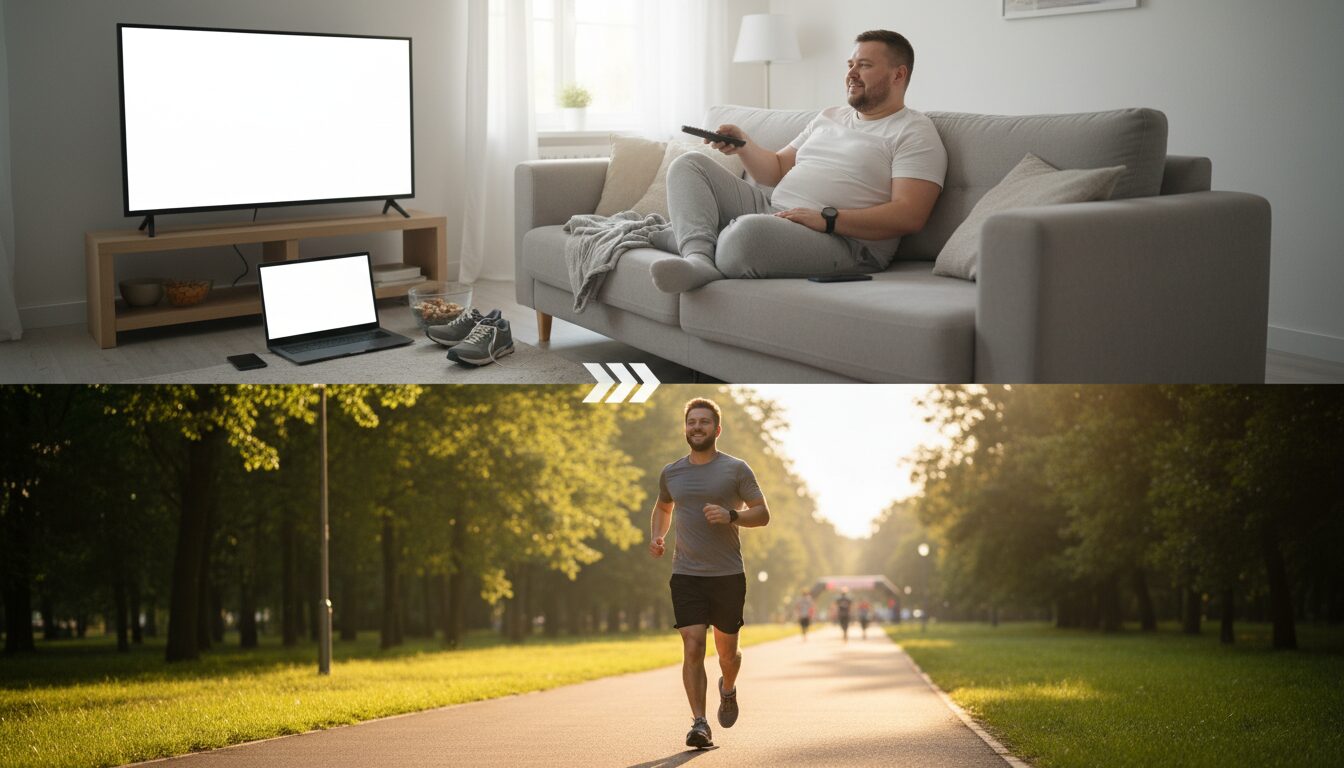
The Couch to 5K running plan is a structured 9-week program that gradually builds running endurance through progressive walk-run intervals, designed to take complete beginners from sedentary to running a continuous 5K. This evidence-based approach prevents injury while building cardiovascular fitness systematically.
The Essentials
- Complete beginners can safely progress to running 5K continuously in 9 weeks
- Program uses scientifically-backed walk-run intervals to build aerobic capacity
- Free apps and PDF resources make the program accessible to everyone
- Modifications exist for people with joint problems, irregular schedules, and winter training
- Mental preparation strategies help overcome common running anxieties
Jump To
- What is the Couch to 5K Running Plan and How Does It Work
- Complete 9-Week Couch to 5K Running Schedule Breakdown
- Best Free Couch to 5K Apps and Resources
- Couch to 5K for People with Joint Problems or Arthritis
- Winter Training Modifications and Indoor Alternatives
- Nutrition and Hydration Strategy for Beginner Runners
- Couch to 5K Program for Shift Workers with Irregular Schedules
- Mental Preparation and Overcoming Running Anxiety
- Frequently Asked Questions About Couch to 5K Training
What is the Couch to 5K Running Plan and How Does It Work
The couch to 5k running plan is a beginner-friendly training program that uses progressive walk-run intervals over 9 weeks to build running endurance safely. The program alternates between walking and running periods, gradually increasing running time while decreasing walking breaks. This methodology prevents overuse injuries common in new runners while systematically building cardiovascular fitness.
Research shows that approximately 75% of participants who complete the full couch to 5k running plan successfully finish a 5K race within the 9-week timeframe. The program’s effectiveness stems from its gradual progression principle, which allows the body’s cardiovascular and musculoskeletal systems to adapt without overwhelming stress. Studies indicate that beginners who follow structured walk-run programs have 40% lower injury rates compared to those who attempt to run continuously from day one. For those interested in combining running with other fitness goals, incorporating effective cardio exercises for weight loss can complement your C25K journey.
Who Created the Original Couch to 5K Program
Josh Clark created the original Couch to 5K program in the late 1990s for the Cool Running website to help his 50-something mother begin running. Clark, a web developer and recreational runner, designed the program after researching exercise physiology principles and consulting with running coaches. The program gained popularity through word-of-mouth sharing on early internet running forums before becoming widely adopted by running communities worldwide.
The Cool Running website became the primary distribution platform for the original couch to 5k running plan free version, making it accessible to millions of aspiring runners. Clark’s approach emphasized gradual progression and injury prevention over speed, which became fundamental principles adopted by virtually all subsequent C25K variations. Many participants find that combining running with a structured beginner workout plan helps accelerate their fitness progress during the 9-week program.
Why Does the 9-Week Structure Work for Beginners
The 9-week structure allows sufficient time for physiological adaptations while maintaining motivation through achievable weekly goals. Exercise physiology research demonstrates that aerobic capacity improvements typically begin within 2-3 weeks of consistent training, with significant gains occurring over 6-9 weeks. The program’s duration aligns perfectly with these adaptation timelines.
The weekly progression creates psychological momentum by providing regular achievement milestones that prevent discouragement. Studies show that beginners who experience early success are 60% more likely to maintain exercise habits long-term. Additionally, the 9-week timeframe allows for proper musculoskeletal adaptation, including strengthened tendons and ligaments that support injury prevention. For runners seeking to extend their training beyond the initial 5K goal, progressing to a half marathon training program provides a natural next challenge.
Complete 9-Week Couch to 5K Running Schedule Breakdown
Weeks 1-3: Walk-Run Intervals Foundation
The first three weeks establish the foundation with short running intervals mixed with walking recovery periods. Week 1 begins with 60-second running intervals alternated with 90-second walking breaks, repeated 8 times within a 20-minute workout. This conservative approach allows complete beginners to experience running success without overwhelming their cardiovascular or musculoskeletal systems.
Week 2 extends running intervals to 90 seconds while maintaining 2-minute walking recovery periods. Week 3 introduces two different workout patterns: two sessions with 90-second runs and 90-second walks, plus one session featuring two 3-minute runs separated by a 3-minute walk. This progression builds confidence while gradually increasing continuous running time. Many beginners find that incorporating flexibility training and stretching routines during these early weeks helps prevent muscle tightness and improves recovery.
Weeks 4-6: Building Continuous Running Time
Weeks 4-6 mark the transition from short intervals to sustained running periods, challenging beginners to run continuously for increasing durations. Week 4 features 3-minute and 5-minute running segments separated by walking breaks, preparing runners for longer continuous efforts. Week 5 includes three different workouts: 5-minute runs, 8-minute runs, and a challenging 20-minute continuous run.
Week 6 represents a significant milestone with two 10-minute running segments separated by a 3-minute walking break, followed by a 25-minute continuous run later in the week. These longer running periods develop aerobic endurance while building mental confidence for sustained effort. The psychological challenge of running continuously for 20+ minutes often proves more difficult than the physical demands for many participants.
Weeks 7-9: Achieving Your First 5K
The final three weeks focus on continuous running for the full 30-minute duration needed to complete a 5K distance. Week 7 eliminates walking breaks entirely, with three 25-minute continuous running sessions. Week 8 extends to 28-minute runs, while Week 9 culminates in three 30-minute running sessions that simulate actual 5K race conditions.
By week 9, most participants can complete the full 5K distance (3.1 miles) within the 30-minute timeframe, though running pace varies significantly among individuals. The program prioritizes endurance over speed, with many graduates running 5K in 28-35 minutes initially. Participants who wish to improve their running performance further can explore science-backed athletic performance training methods after completing the basic program.
Best Free Couch to 5K Apps and Resources
Top-Rated Couch to 5K Mobile Apps
Several highly-rated mobile apps provide free access to the complete Couch to 5K program with audio coaching and progress tracking features. The official “Couch to 5K” app by Active Network offers the original program structure with customizable music integration and achievement badges. “Zombies, Run! 5K Training” gamifies the experience by incorporating survival storylines that make running intervals more engaging for users who enjoy narrative-driven motivation.
“C25K – 5K Trainer” by Fitness22 provides multiple program variations and detailed progress analytics, while “Get Running” by BBC features celebrity coach guidance and social sharing capabilities. These apps typically include GPS tracking, pace monitoring, and calendar integration to maintain training consistency. Most free versions contain occasional advertisements but provide full access to the core training program without subscription requirements.
Free PDF Downloads and Printable Plans
Multiple websites offer free PDF downloads of the complete Couch to 5K training schedule for offline access and physical tracking. The original Cool Running website maintains the authoritative free PDF version, while NHS (National Health Service) provides a medically-reviewed variant with additional safety guidelines. These printable versions allow users to track progress manually and remain accessible without smartphone dependency.
Popular PDF variants include weekly goal checklists, motivational quotes, and space for personal notes about each workout session. Some versions incorporate basic nutrition tips and injury prevention advice alongside the core running schedule. Physical printouts prove particularly valuable for users who prefer tangible goal-tracking methods over digital interfaces.
Couch to 5K for People with Joint Problems or Arthritis
Low-Impact Modifications and Alternative Exercises
Individuals with joint problems can safely participate in modified Couch to 5K programs using low-impact alternatives that reduce stress on knees, hips, and ankles. Elliptical machines provide excellent cardiovascular training while mimicking running motions without impact forces. Pool running (aqua jogging) offers another effective alternative, allowing full running form practice with water buoyancy supporting body weight.
Treadmill training with slight inclines can reduce impact forces compared to outdoor running on concrete surfaces. Some participants alternate between walking on inclines and brief jogging intervals on flat surfaces to minimize joint stress while building cardiovascular fitness. The key principle involves maintaining the program’s interval structure and progression timeline while substituting lower-impact movement patterns.
When to Consult Healthcare Providers
People with diagnosed arthritis, previous joint injuries, or chronic pain should consult healthcare providers before beginning any version of the Couch to 5K program. Medical clearance becomes particularly important for individuals over 50, those taking medications affecting heart rate or blood pressure, and anyone with a history of cardiovascular issues.
Physical therapists can provide valuable guidance on proper running form modifications and supplementary strengthening exercises that support joint health during training progression. Regular check-ins with healthcare providers during the 9-week program allow for adjustments based on individual response and prevent minor discomfort from developing into serious injuries.
Winter Training Modifications and Indoor Alternatives
Treadmill Training Adjustments
Treadmill training requires specific adjustments to replicate outdoor running benefits while accommodating the consistent pace and reduced wind resistance of indoor equipment. Setting treadmill inclines to 1-2% helps simulate outdoor running effort levels and compensates for the lack of air resistance. This modification ensures that indoor training sessions provide equivalent cardiovascular challenge to outdoor workouts.
Many beginners find treadmill interval training easier to manage because of precise speed and timing controls. However, the consistent pace can become monotonous, so varying speed slightly within running intervals helps maintain engagement. Some users benefit from covering the time display and focusing on audio coaching or entertainment to avoid clock-watching during longer running segments.
Cold Weather Outdoor Running Safety
Cold weather running requires proper layering, visibility gear, and surface awareness to maintain training safety during winter months. Base layers made from moisture-wicking synthetic materials prevent sweat accumulation that can cause dangerous cooling. Middle layers provide insulation, while outer shells protect against wind and precipitation without trapping excessive heat.
Visible clothing and reflective accessories become crucial during shorter daylight hours, while proper footwear with adequate traction prevents slips on icy surfaces. The general rule suggests dressing as if temperatures are 15-20 degrees warmer than actual conditions, since running generates significant body heat within the first 10 minutes of exercise.
Nutrition and Hydration Strategy for Beginner Runners
Pre-Run and Post-Run Eating Guidelines
Proper timing and composition of pre-run meals significantly impact performance and comfort during Couch to 5K training sessions. Eating 2-3 hours before running allows adequate digestion, while small snacks 30-60 minutes prior can provide quick energy without causing digestive discomfort. Ideal pre-run foods include easily digestible carbohydrates like bananas, toast with honey, or small portions of oatmeal.
Post-run nutrition within 30 minutes helps optimize recovery and prepare for subsequent training sessions. Combining carbohydrates and protein in a 3:1 or 4:1 ratio supports muscle recovery and energy replenishment. Simple options include chocolate milk, Greek yogurt with fruit, or whole grain toast with peanut butter. Avoiding high-fiber, high-fat, or unfamiliar foods before running prevents gastrointestinal distress during workouts.
Hydration Needs for 30-Minute Workouts
Adequate hydration before, during, and after 30-minute Couch to 5K sessions supports performance and prevents dehydration-related fatigue. Pre-hydration involves drinking 16-20 ounces of water 2-3 hours before exercise, followed by 6-8 ounces 15-20 minutes before starting. Most 30-minute sessions don’t require mid-workout hydration unless temperatures exceed 80°F or humidity levels are particularly high.
Post-workout rehydration should replace fluid losses, typically 16-24 ounces for every pound lost during exercise. Monitoring urine color provides a simple hydration assessment: pale yellow indicates adequate hydration, while dark yellow suggests dehydration. Sports drinks become beneficial only during hot weather training or for individuals who sweat excessively during 30-minute sessions.
Couch to 5K Program for Shift Workers with Irregular Schedules
Adapting Training Days to Rotating Shifts
Shift workers can successfully complete Couch to 5K by focusing on weekly training frequency rather than specific training days, allowing flexibility around work schedules. The key principle involves completing three training sessions per week with at least one rest day between sessions, regardless of which calendar days those sessions occur. This approach accommodates rotating shifts while maintaining the program’s progressive structure.
Planning training sessions around sleep schedules proves more important than maintaining consistent daily timing. Workers transitioning between day and night shifts should avoid intense training sessions within 6 hours of major sleep schedule changes, as this combination can increase fatigue and injury risk. Some find success in scheduling training sessions before work shifts rather than after, when energy levels tend to be higher.
Maintaining Consistency with Variable Sleep Patterns
Variable sleep patterns require strategic planning to ensure adequate rest between training sessions while accommodating shift work demands. The general rule of obtaining 6-8 hours of sleep before training sessions becomes more challenging but remains crucial for performance and injury prevention. Some shift workers benefit from splitting sleep into main sleep periods plus strategic naps.
Maintaining consistent meal timing relative to training sessions, rather than clock time, helps stabilize energy levels despite irregular schedules. Keeping a training log that tracks sleep quality, energy levels, and workout performance can help identify optimal timing patterns for individual circumstances. Many shift workers find that maintaining training consistency actually improves their ability to adapt to changing work schedules.
Mental Preparation and Overcoming Running Anxiety
Building Confidence for Public Running
Many beginners experience anxiety about running in public spaces, but specific strategies can build confidence and reduce self-consciousness during Couch to 5K training. Starting with less crowded locations like quiet neighborhood streets, park paths during off-peak hours, or school tracks after hours allows for comfortable practice away from heavy pedestrian traffic. Gradually progressing to busier areas as confidence builds helps normalize the experience of running around others.
Remember that most people are focused on their own activities and pay little attention to passing runners. Research shows that the “spotlight effect” causes people to overestimate how much others notice their appearance or performance. Wearing comfortable, well-fitting athletic clothing that allows free movement can boost confidence, while listening to motivating music or podcasts provides mental distraction from surroundings.
Dealing with Exercise-Induced Anxiety
Exercise-induced anxiety affects some beginners during Couch to 5K training, but understanding symptoms and coping strategies can prevent this from derailing progress. Physical symptoms like rapid heartbeat, sweating, and shortness of breath are normal exercise responses that can feel similar to anxiety symptoms. Learning to distinguish between normal exercise sensations and anxiety responses helps prevent panic reactions during training.
Deep breathing techniques, progressive muscle relaxation, and positive self-talk can manage anxiety symptoms that arise during running. Some find success in running with trusted friends or family members who provide emotional support and distraction. Starting with shorter distances than prescribed and gradually building up to full session lengths can help those who feel overwhelmed by the standard program progression.